Not many women can lay claim to being shot at, levitated, crushed, folded into tiny suitcases, pierced and sawn in half, let alone 11,000 times.
And not many women can lay claim to co-star in the biggest travelling show in the world, let alone as one of the most beautiful women in the world.
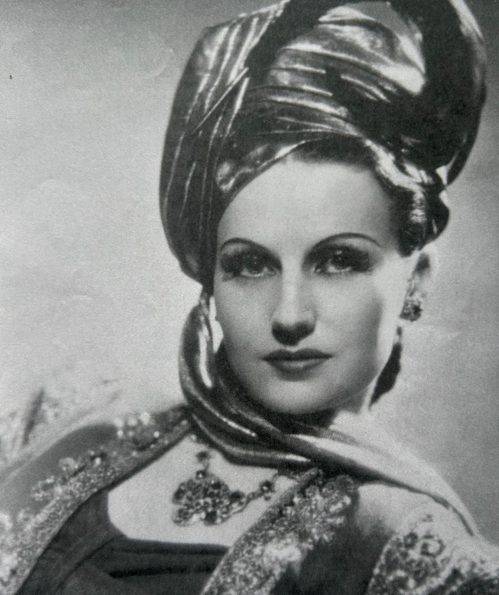
Big call, very big. But then, the Geelong-born Loretta Miller, better remembered as Moi-Yo Miller, was about as big an international stage superstar as you could get in the day.
She was the captivating, elegant and mysterious beauty headliner of the great Dante’s Mystery Revue, a magic extravaganza that galloped around the globe from Moscow to Manhattan, Shanghai to Sweden, London to Japan and everywhere in between during the golden age of magic, from the 1930s to 1950s.
Dante, born Harry Jansen, was the biggest of those stage sorcerers and Moi-Yo, far from his foil, was a star in her own right, celebrated even in recent years as the pinnacle of her craft by Women in Boxes documentary film director Harry Pallenberg. Every magician, assistant and historian he interviewed placed Moi-Yo at the summit.
“She brought style and sophistication,” he said. “She was more than an assistant, she was a partner.”
Cast an eye around the Geelong CBD and you’ll find artist Schmikey Cassar’s huge mural of Dante’s partner adorning a wall at the corner of James Street and Minns Lane. Few are aware of her remarkable, even bizarre, rise to fame from old Skene Street in Newtown to the biggest stages of Europe, the US and Asia.
Born Mona Loretta Miller in 1914, she was one of four kids and nicknamed Miki. She spent her childhood between the baths of Eastern Beach, Johnstone Park and dance competitions tripping Highland flings, Irish jigs, strathspeys and reels and which the Miller sisters dominated.
While still a teen, she was spotted by the touring Dante when he staged a competition to find the most beautiful woman in Australia. Miki took the honours
She subsequently spent a year learning Dante’s illusions, “special training of the occult”, before sliding into any of the magician’s claustrophobic boxes. She also started on redesigning costumes, refining the show’s presentation, updating its music, transforming it from vaudeville to master illusion stagecraft.
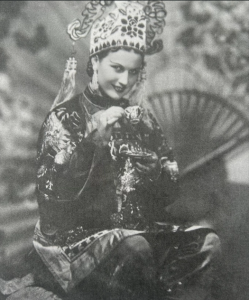
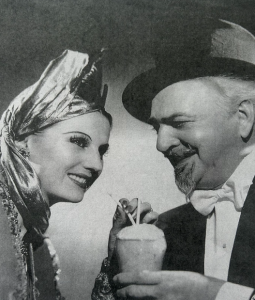
When Moi-Yo hit the spotlight, she was a vision of harem satin, silk and turban, unequalled lithe chic, a showstopper who melded faerie with fantasy, incomparable with impossible. The show became the largest touring illusion spectacle on the planet, playing behind closed borders in China and Stalinist Russia, across Europe and North Africa, to royalty, celebrities and spell-bound crowds.
When World War II broke out, Moi-Yo and Dante were in Berlin, capital of cabaret and decadence, and nerve centre of Nazi Germany. So highly regarded were they that SS troops escorted them from the country en route to Sweden’s King Gustav V, who offered refuge and time to regroup before they eventually headed for New York and Broadway.
I met Moi-Yo twice, before she passed in 2017 at the age of 104. She was 95 and 98 respectively, and more energetic, outgoing and exciting than anyone has a right to be at that age. She could still double over, easily touch her toes. Her eyes glinted with mischief and charming flirtation, and her memory of a career 50, 60 and 70 years in the rear vision mirror was still sharp.
“I remember everything I did in all of those shows. It was fun, such fun,” she told me. “We were young. It didn’t seem like hard work though I suppose it was.
“It’s surprising because I was kind of there and then I wasn’t there, if you know what I mean. It was a long haul.
“Everywhere we went, of course, we had entree into the best of places. But we were not meeting people on the streets, so to speak, unless we met friends in the group and they had friends – then we’d get to meet someone that way.
“First of all, we had to get the paperwork done, visas with all those countries, and we had to get entree by some very well-known people – the Strasbourgs or someone like that – and then we had a toe in and we had to work our way through.’’
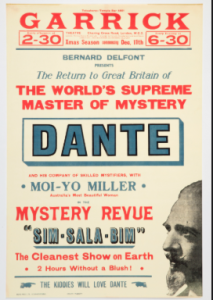
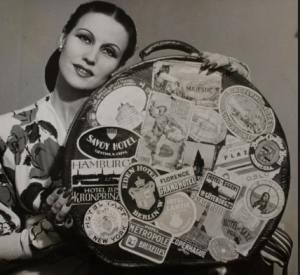
But all that merciless twisting, squashing, cramming?
“My happy faculty,” she said, all matter-of-fact. “I could fit where everybody else couldn’t.”
She pointed to a case not much larger than a hat box. “See that suitcase? I just doubled up in that and they put the lock on it.
“I didn’t get claustrophobia, never, but sometimes I was very glad to get out of where I was. Sometimes I thought ‘Oh, they’ve forgotten me!’ but they were wonderful days.
“Claudia Cassidy, a society writer in England, came to the show I don’t know how many times and in the first write-up she said, ‘That girl folds up like a piece of Chinese silk’. I thought it was lovely.
“Fortunately, I was very acrobatic when I was a child. That played a big part. I can’t remember when I wasn’t dancing.”
The Moi-Yo came while touring Asia where Chinese fans, unable to quite wrap their tongues around Miller, dubbed her Moi-Yo. Mona Loretta Miki Miller became the exotic, if slightly tautological, Moi-Yo Miller, a name that bewitched not just audiences the globe over but her peers as well.
Director Pallenberg has no doubt about her place in the industry hierarchy.
“Moi-Yo Miller has an interesting position in the pantheon of assistants,” he says.
“Every single person we interviewed – both man and woman, magician or assistant, historian or magic fan – saw Moi-Yo as the pinnacle of the art.”
This article appeared in Geelong and Surf Coast LIVING Winter 2026 magazine.