
Losing objectivity, surrendering integrity
Image: The Australian
Something’s been iffy about Australian media coverage of the Middle East since the October 7 massacre of Israel’s Nova festival-goers by Hamas.
Much more than iffy, actually, more a case of distinctly and disturbingly on the nose.
Almost immediately, the hundreds of innocents murdered and kidnapped were somehow deemed deserving of the horrors and terrors visited on them by their vicious, ruthless, rancorous attackers by extensive elements of the media that come down squarely in support of the Palestinian cause.
Never mind the manic and virulent bloodlust that erupted on so-called social media. That cesspool of humanity is the wild west of unchecked depravity.
But the mainstream media that likes to pride itself on producing breakfast for the brain, quality journalism, and fair and balanced, accurate and unbiased reporting has proven itself lacking in just about any of those attributes.
Israel, despite constant daily bombardment from Hamas and its affiliates for years, in addition to the massacre, has been villified as the aggressor.
Hamas, for all its human-shield defences, and starvation terror against its constituents, has been painted as hard done by, an undeserving and tortured victim. As if it didn’t bring every Israeli defensive rocket 0n its own head.
More recently, we’ve seen an abject lack of concern from the West’s pro-Palestine camp for the massacred, tortured and executed victims of its backers, Iran, in its brutal purges.
How did we get to this? How did we find our purported media champions of integrity so off the mark?
I could bang on for some time but an article in The Australian by Michael Gawenda, former editor of The Age, says it better than I would and with considerably more clout.
Read on:
FROM JOURNALIST TO JEW TO ZIONIST
MICHAEL GAWENDA
In September 1997, I was appointed editor of The Age. I had worked at the paper, on and off, for almost three decades.
Neither the announcement of my appointment as editor nor the announcement that I was appointed editor-in-chief in 2003 mentioned that I was a Jew, although in the Jewish community the fact that I was the first Jew to be appointed to the position in the paper’s 150-year history was cause for some celebration.
In the decades before I was appointed editor there were few instances when the fact that I was a Jew was an issue; not when I worked for The Age, not when I worked for the Herald and Weekly Times and not when I worked for Time magazine.
What was important to me was that I was committed to the ethical rules of good journalism – open-mindedness, fairness, accuracy and something approaching balance. The idea of balance is often misunderstood.
It is not giving every view on any issue equal weight. What it means is avoiding giving preference to voices that you find agreeable and in line with your thinking but, rather, making sure that you have given not equal space but sufficient weight to the arguments and experiences of people with whom you may disagree, even vehemently so.
The fact that I was a Jew was not an issue. Not among my fellow journalists and not in the letters that came flooding into Time. This was what great journalism was about. Deep reporting during which the reporter’s preconceptions are put aside as much as is possible to get as close to the “first rough cut of history”.
Let us now fast-forward to August 2025. Sky News presenter and journalist Sharri Markson had just interviewed Israeli Prime Minister Benjamin Netanyahu when Linton Besser, the host of Media Watch on the ABC, called.
He wanted to know whether I would be prepared to comment on the interview for his program. He had asked Ray Martin and Kerry O’Brien to comment as well. I agreed to do it.
I criticised the interview because Markson had not asked the obvious questions about Netanyahu’s recent criticism of the Australian government and, specifically, of its failure to deal with what was, Netanyahu said, an explosion of antisemitism. Indeed, Anthony Albanese was exacerbating the antisemitism problem, he said.
This was an extraordinary intervention in Australian politics. The Jewish community leadership criticised Netanyahu for his intervention. So why no questions about this?
Martin and O’Brien more or less agreed with me on this, but O’Brien went on to say Markson should have challenged him over the war in Gaza and this should have been the main thrust of the interview.
I thought he was wrong; Markson had a few minutes and the issue of Netanyahu’s intervention in Australian policies was clearly the main issue for Australian audiences.
Before Media Watch went to air, Besser called to read to me how he was going to characterise me on the program. Was it OK if he described me as a veteran journalist and a Zionist?
I asked how he knew I was a Zionist. And how was this important? Wasn’t it important that I had been a senior editor at Time and editor-in-chief of The Age? Was I not a Zionist, he asked. When I requested to be called a former editor-in-chief of The Age and nothing else, Besser said it was important to acknowledge my views on Israel.
What was used eventually was that I was a former editor of The Age and a contributor to The Australian who has written about his deep feelings for Israel. I agreed to the change, albeit reluctantly.
I wondered how it was that Besser could want to characterise me as a Zionist when he knew what the word had come to mean among many journalists and many people on the left.
Zionists were supporters of an evil, racist ideology and of Israel, a genocidal, apartheid state.
What did it mean that the host of Media Watch wanted to refer to me as a Zionist?
That question is at the heart of the way a large section of the media, a large number of journalists, have reported the rise of hostility and hatred towards Jews in Australia across the past couple of decades and that exploded after October 7, 2023.
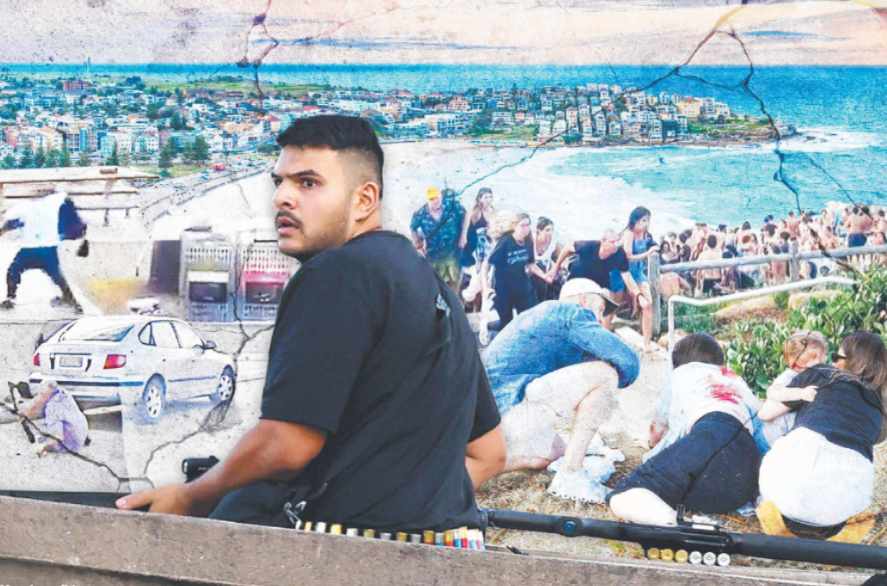
It is the question that has to be answered in light of the attacks on Jewish institutions and assaults on Jews growing and culminating in the Hanukkah massacre at Bondi Beach on December 14, 2025.
Answers to this question need – that dreaded word – context. 5\
In 1970 when I started at The Age, the majority by far of journalists on the paper – including the legendary editor Graham Perkin – were not tertiary educated. Many of the journalists were working-class men – there were few women in journalism – including the sub-editors on the papers for which I worked, who in the main were masters of plain, grammatically correct English.
There were no celebrity journalists. They were reporters, wonderful reporters many of them, out there most afternoons and nights – for that was when we worked – in search of a story.
All journalists now have a university degree. They come, in the main, from the middle class, many of them from private schools. Most of them have done undergraduate degrees in journalism. Some have done a master of journalism.
I know something about university journalism courses because when I left full-time journalism I was hired to set up a journalism centre at the University of Melbourne and during my time at the university I helped plan a master’s program that started after I left.
The Centre for Advancing Journalism is thriving, I’m told, and the master’s program apparently is doing OK, although it is not the program I had wanted: one aimed at mid-career journalists who wanted to sharpen their skills, learn new skills and have the time to think about journalism in a digital age, when most media companies were in crisis, their economic model destroyed by the internet, their future cloudy at best.
This master’s program didn’t happen. What happened can be summed up by the fact that one of the senior lecturers in journalism and international journalism in the master’s program at Melbourne University is Jeff Sparrow, who was the editor of Overland magazine when it published an open letter titled “Stop the Genocide in Gaza” on October 21, 2023, 14 days after the October 7 Hamas attack and before there had been any ground invasion by the Israel Defence Forces.
The letter was signed by hundreds of writers and artists. To understand the significance of Sparrow’s position and that of journalists who signed his letter, one needs to understand the ethical conflict this created.
When I was editor of The Age, the publisher and I, together with the staff, drew up a code of condict for the paper. The code sets out ethical standards expected of The Age.
Central to the code were these principles:
- Staff should seek to present only fair, balanced and accurate journalism.
- It is in the best interests of The Age that real and perceived conflicts of interest be eliminated.
- Staff involved in a story who believe they have an interest that could be seen to influence their views on the issue at hand should acknowledge that interest during preparation and at publication of the story.
These principles of what constituted ethical journalism were – and remain, it must be emphasised – widely shared by most newspapers, the ABC, commercial television networks’ news services, the Australian Press Council and the journalists union, the Media, Entertainment and Arts Alliance.
The ABC editorial policies document is clear and unequivocal about this. Its journalism must be independent and responsible and practised with integrity. The ABC has a statutory duty to be accurate according to “recognised standards of objective journalism”. And its journalism must be impartial and include “diverse perspectives”.
This was before social media took hold and journalists became brands and the young journalists, armed with a journalism degree, came to view the old ethical rules as quaint and outdated.
This produced the sort of coverage of the October 7, 2023, massacre of Israelis by Hamas terrorists, their taking of 251 hostages and the subsequent war in Gaza, most of which only newspaper editors and television executive producers who are wilfully blind and wilfully deaf would be proud.
This is particularly true when it comes to the way the rise and then the explosion of hostility to Jews and Jew-hatred after October 7 was covered in large sections of the media.
I mean by this the ABC and the Nine newspapers, The Sydney Morning Herald and The Age, and Guardian Australia.
In my view, The Australian’s coverage of these issues – I mean in particular how the rise in Jew-hatred had affected the lives of Australian Jews and threatened Australian multiculturalism – has been pretty good.
I must declare that I write for The Australian. I am happy to do so, but I would have also liked to reach the readers of the paper I wrote for and edited, but The Age has not wanted to publish me. Not a single piece by me has been published since October 7, 2023.
To understand how many journalists see their role in the coverage of Israel and the Palestinians and the rise in hostility towards Jews, we need to go back to 2021.
In May 2021, a letter signed by 400 journalists and publishers during the short war between Hamas and Israel that year started with a preamble that these journalists and publishers presented as a guide to the way the war should be covered.
Here are the main points:
- Israel’s government led by Netanyahu had unleashed an unprovoked brutal war against the besieged population of Gaza.
- Seventy-five years after the Nakba – the expulsion by Israel of 750,000 Palestinians – Israel was maintaining an apartheid regime against the Palestinians in the West Bank and Gaza and inside Israel (my italics).
This was the potted history – the context – that the letter signers wanted journalists covering the Israel-Palestinian conflict to sign on to and use whenever they reported on any aspect of the Israel-Palestinian story and, importantly, when it came to covering the Australian Jewish community and its formal leadership, a community that was overwhelmingly attached to Israel and its central role in Jewish life.
The preamble ends with this: “We believe that the coverage of Palestine must be improved, that it should no longer prioritise the same discredited spokespeople and narratives and that new voices are urgently needed.”
The letter went on to say that journalists must prioritise the voices of the oppressed, the Palestinians, and avoid “both-siderism” that equates the victims of the “military occupation to its instigators”.
What is more, media organisations must respect the right of journalists to publicly and openly express personal solidarity with the Palestinian cause without penalty to their personal or professional life.
How all this would not compromise their reporting is wholly unclear, as if such old-fashioned considerations no longer mattered.
Then, in October 2021, Monash University Publishing – as part of a series of small books on government policy commissioned by the then Monash University guest publisher Louise Adler – published Dateline Jerusalem: Journalism’s Toughest Assignment by ABC senior editorial executive John Lyons, who was head of investigations and oversaw some of the ABC’s highprofile programs, including Four Corners, when he wrote Dateline Jerusalem.
By the time it was published he was the ABC’s global affairs editor. The thesis of his book was that a powerful lobby, variously referred to as the Israel lobby or the Jewish lobby, had exercised its formidable powers to bend editors and journalists to its will, to make them too frightened of retaliation to properly and vigorously cover the Middle East, especially what Israel was doing to the Palestinians.
This “exposure” of a powerful Jewish lobby and its nefarious work by Lyons was not new.
For decades sections of the left had worried about the way “powerful” Jews forced weak-kneed Australian governments – prime ministers and foreign ministers – to act against our national interest when it came to Israel.
Lyons had been a long-time, Middle East correspondent for The Australian. He also had overseen iconic ABC programs and investigations.
How it was appropriate for him to write about the way powerful Jews were distorting and censoring the journalism of reporters under his control is beyond me.
Instead, Lyons was given the softest interviews on the ABC. He was clearly a hero to many ABC journalists.
He went on to become an award-winning journalist for his coverage of the Gaza war. He continued to argue that the Israel lobby was desperately trying to silence him.
The letter signed by hundreds of journalists in May 2021 – similar letters were signed by thousands of journalists in the US and Britain – and the Lyons book in which he argued so fiercely against the Israel lobby/Jewish lobby became the blueprint for how journalists would cover the October 7 Hamas massacre of Israelis and the taking of hundreds of hostages, and the subsequent Gaza war.
The goal was to expose the nefarious doings of the Israel/Jewish lobby, that bunch of powerful Jews who were trying to silence journalists and were using the exaggerated threat of antisemitism as a weapon to counter criticism of Israel’s “genocidal” war in Gaza.
The journalists who signed the letter were, in the main, the product of university journalism courses in which they were instructed by academics such as the aforementioned Sparrow, the editor of Overland magazine.
Days after the October 7 attacks, Sparrow organised and published the now-infamous letter signed by hundreds of writers that urged the massacre by Hamas of 1200 Israelis to be seen as an act of “resistance”.
He was teaching journalism and what constituted good, ethical journalism in the masters course at Melbourne University.
In the weeks after the October 7 massacre of Israeli men, women and children and the taking of hundreds of hostages, including children who were still toddlers, a dozen or so letters signed by hundreds of journalists and supported by the journalists union, the MEAA, were distributed.
The first of these letters was released and distributed to all media organisations on November 10. The signatories to the letter, hundreds of them, identified as members of the MEAA.
The letter condemned the Australian government’s support for “Israel’s genocidal assault on Gaza”. The letter went on to demand that the government change its policies and condemn Israel for its “genocide” of the people of Gaza.
Some of the letters urged journalists, with the support of the MEAA, to give equal weight to statements coming from the declared terrorist group Hamas to those from the IDF.
Scores of letters and petitions were circulated and signed by thousands of journalists in the Anglosphere that not only called on governments to end their support for Israel but urged journalists to side with the Palestinians, preference their voices and implicitly silence the voices of Zionists and Israel defenders, defenders of a “genocidal state”.
Perhaps the starkest illustration of this was the news coverage and the commentary that followed the release last July of the report by the government-appointed envoy to combat antisemitism, Jillian Segal.
The report was released by the Prime Minister at a solemn press conference. There, too, was Home Affairs Minister Tony Burke, who is also Arts Minister. Albanese spoke about the importance of Segal’s work and how the government would carefully examine the report’s recommendations and act accordingly as soon as possible to curb rising antisemitism.
The actual report and its recommendations barely had any coverage on the ABC, in The Age and The Sydney Morning Herald.
The plan had taken 12 months to prepare, with significant contributions from major Jewish institutions such as the Executive Council of Australian Jewry.
The recommendations in the report came from the mainstream of the Jewish community.
Not long after the press conference, social media was full of hate and abuse directed at these Zionists who had conjured this plan to protect and provide cover for “genocidal Israel”.
The posts maintained these people were powerful Jews, Zionist Jews, supporters of genocide and adherents of an ideology that was evil and racist and was designed to oppress and eventually ethnically cleanse the Palestinians, the indigenous people of Palestine.
In The Age and The Sydney Morning Herald, a Jewish lawyer, Josh Bornstein, wrote of the way the plan was designed to subvert Australia’s legal system. Bornstein is an anti-Zionist who believes an Israel lobby of powerful Jews has worked in the interests of Israel and not Australia.
In Guardian Australia, Adler, another anti-Zionist Jew, wrote about the way the plan weaponised antisemitism – surely a shocking and grave accusation – in the service of Zionism and Israel. And she saw in the plan the work of the dreaded and dreadful Israel lobby.
Both are on the advisory board of anti-Zionist group the Jewish Council of Australia.
Not only has The Age, The SMH and the ABC given the JCA space beyond what could be considered fair, but editors of opinion pages, when it came to giving space to Jewish commentators who may not be anti-Zionist but who hate Netanyahu, believe that Israel has committed major war crimes in Gaza – if not quite genocide – and believe that somehow, if there has been a real rise in Jew-hatred, Netanyahu and his criminal government are responsible.
Writer Richard Flanagan wrote this in The Age and The Sydney Morning Herald in response to the Segal plan:
“The report creates an attractive template that could be broadened to silence dissenting voices that question the state’s policies on other issues … Despite the Segal report’s claims about rising antisemitism, some of which are contested as exaggerated by leading Jewish figures (he is referring to Adler in particular), it fails to provide a single citation in evidence.”
And he goes on to attack Segal’s credibility because her husband had made donations to the lobby group Advance which, Flanagan writes, “advocates anti-Palestinian positions”.
This attack was subsequently amplified by other journalists who considered Segal a creature of the Israel lobby, given she had once been the president of the Executive Council of Australian Jewry.
In its coverage of the plan, the ABC concentrated on one recommendation: that the ABC and SBS as publicly funded broadcasters should be monitored to ensure the coverage of the Gaza war and of the Jewish community in Australia was fair and accurate.
In a major interview on the 7.30 program, Segal was vigorously interrogated about this recommendation, and nothing else in her report, by host Sarah Ferguson, who was clearly outraged by Segal’s “attack on the independence of the ABC”.
After the Bondi Beach massacre, despite the shock expressed by many journalists about what had happened, there was great enthusiasm about the reluctant and late decision by the Albanese government to set up a royal commission into antisemitism and what it called “social cohesion”.
The Age published a cartoon by Cathy Wilcox that suggested the outpouring of support for a royal commission from people in business and professional sport was not spontaneous but the work of a certain powerful group whose conductor was the evil Netanyahu.
There was a time when journalists were faithful servants of the institutions for which they worked – the ABC and the big newspapers in particular – by which I mean they were proud of these institutions and felt privileged to work for them.
That time has gone. The decline of trust in institutions, generally, has infected journalists. Many journalists now see themselves as individual “brands” who happen to work for the ABC or The Age or the SMH. There is little pride – or trust for that matter – in their employers.
It is important to know how we got here for there to be any real hope of reasserting the ethical principles that once governed what was considered good journalism.
What is needed is brave editorial leadership; for editors and ABC senior editorial executives to reassert their authority, to consistently insist that journalists adhere to the ethical principles of the organisation.
They must be the enforcers of ethical best practice. They must do the work they are paid to do.
Michael Gawenda is a former editor of The Age and the author of the book My Life as a Jew. This is an edited version of a paper published by the Centre for Independent Studies. Gawenda will appear as a witness on these issues at the Royal Commission on Antisemitism and Social Cohesion led by Virginia Bell SC.
This article appeared in The Australian 2 May 2026


