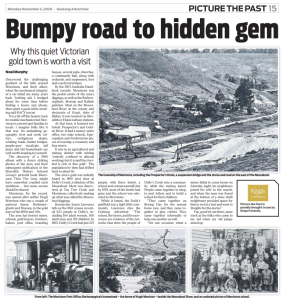
Discovered the challenging gradient of the hills around Morrisons, and their allure, when the mechanical integrity of a car failed of me many years back.
Seeking aid, I trudged about for some time before finding a house and phone, then spent a good while awaiting said RACV rescue.
It is a bit off the beaten track for mobile mechanics but Morrisons is a sweet spot familiar to locals, if but not too many others. I imagine folks like it that way.
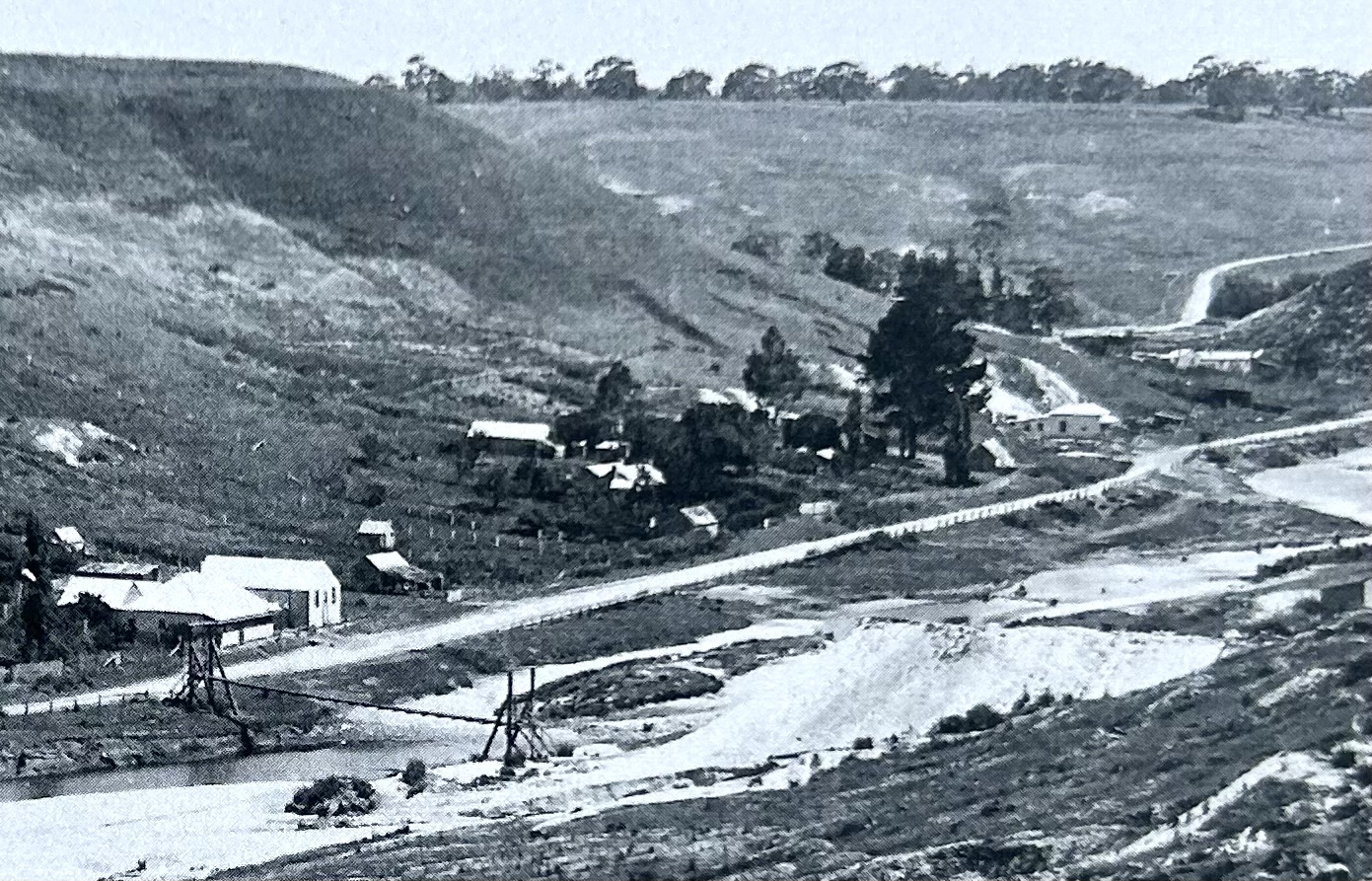
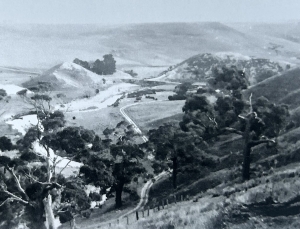
Its undulating geography, river and creek valleys, vertiginous slopes, winding roads, timber bridges, purple-grey eucalypts, tall pines and old homesteads are well worth keeping to yourself.
The discovery of a 1906 album with a dozen striking photos of the area, and their subsequent publication in the Meredith History Interest Group’s pictorial book Morrisons Thru The Lens, might have somewhat cruelled such ambitions. But some secrets should be shared and this is one.
Morrisons, just for the record, was named after settler Hugh Morrison who ran a couple of pastoral leases, Borhoneyghurk and Moreep, in the gold days of the 1850s and ’60s.
The area has hosted mines, schools, a dozen or so storekeepers – gold buyers, butchers, bakers, post office – boarding houses, several pubs, a couple of churches, a community hall, along with orchards, and suspension, foot and coach/car bridges.
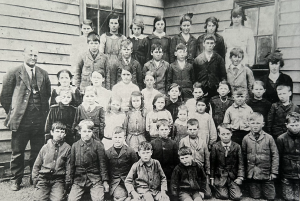
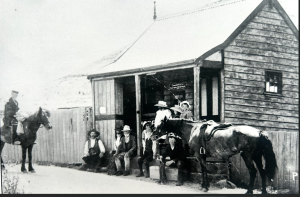
By the 1903 Australia Handbook records, Morrisons is at 37° 55´ S. lat., 144° 5´E.m long., and was the postal centre of the area’s diggings, as well as the Borhoneyghurk, Moreep and Ballark parishes.
Sited on the Moorabool River, in the county and electorate of Grant, shire of Ballan, and 79 postal miles from Melbourne, it was reached by way of Meredith or Elaine Railway Stations.
At that time, it boasted two hotels: Prospector’s and Golden River. It had a money-order office, two State schools (1067 and 2086), Episcopalian and Presbyterian places of worship, a creamery and four stores.
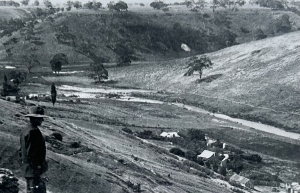
It was in an agricultural and mining district with mining “entirely confined to alluvial workings but it is said the river-bed is rich in fine gold”. Then population by then had drifted back to about 60.
The area’s gold was initially found next door at Dolly’s Creek, a tributary of the Moorabool, in 1856 by prospectors from nearby Steiglitz.
More was discovered at Tea Tree Creek and Morrisons, both a mile away to the south, collectively making up what was called the Moorabool diggings.
In the day, it accommodated a thousand European and several hundred Chinese hopefuls, making it a microcosm of the giant heaving melting pot up the road at Ballarat.
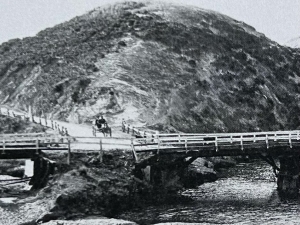
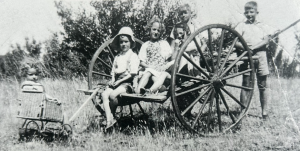
Dolly’s is interesting, too. Researcher Susan Lawrence tells us the 1861 census recorded 623 people at Dolly’s, including 104 adult women, 300 adult men and 219 children.
Members of at least 11 ethnic or national groups were present, reflecting the ethnic diversity of the general gold rush population.
In 1865, Dolly’s Creek was reported as a mining village of 225 people, with three hotels, a school and a steam sawmill. A little over a decade later, by 1878, however, most of the hotels had gone and the school was relocated to Morrisons where most pupils then lived.
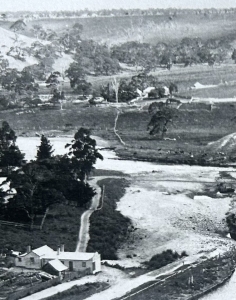
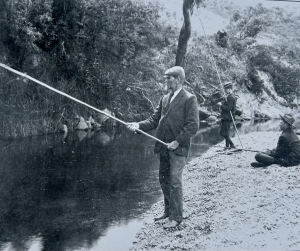
While it lasted, the Dolly’s goldfield was a tight little community. Lawrence cites the Geelong Advertiser:
“The school, the stores, and the racecourse are evidence of the networks that drew the people of Dolly’s Creek into a community while the mining lasted. people came together to shop, to post letters and to build a school for their children.
“They came together on Boxing Day for the annual horse race, and they came together to play cricket. They came together informally to help one another as well.
“On one occasion, when a miner failed to come home on Saturday night, his neighbours joined his wife in the search, and when the man was found at the bottom of a mine shaft neighbours provided space for him to rest in a tent and went to Steiglitz for the doctor.
“On another occasion, a miner was trapped in a cave-in and not only his workmates but the whole community joined in the effort to free him.”
Yep, good lot out there, same stock as the folks came to my aid when my old jalopy seized up.
An edited version of this story appeared in the Geelong Advertiser 2 November 2026.